
Implant Dentistry: The Art of the Perfect Smile
Unlock the secrets of dental implants and explore why implant dentistry might be the perfect solution for your smile. Learn more today!
Welcome to our comprehensive guide on implant dentistry, where we delve into the transformative power of dental implants. From understanding the science of osseointegration to exploring the options between full mouth implants and traditional dental bridges, this guide is your go-to resource for everything you need to know about modern dental solutions for missing teeth.
Implant Dentistry: More Than Just Replacing Teeth
Exploring the Foundations of Implant Success
Implant dentistry offers more than just a solution for replacing missing teeth. It provides a pathway to restoring both the aesthetics and functionality of your smile. Dental implants are titanium posts surgically positioned into the jawbone beneath your gums. Once in place, they allow your dentist to mount replacement teeth onto them. Here’s why implant dentistry stands out: it ensures natural alignment, offers stability similar to natural teeth, and does not affect adjacent teeth unlike dental bridges.
This innovative dental procedure is not merely about aesthetics; it enhances oral health by providing the required support similar to natural tooth roots. With a low failure rate of implants and advent of technologies making the procedures quicker and less invasive, implant dentistry continues to exceed expectations in dental advancements. The success of dental implants hinges on osseointegration, where the titanium post fuses with the jawbone, creating a stable foundation. This process typically takes a few months, ensuring a robust base for the replacement tooth. The use of advanced imaging techniques, such as cone-beam computed tomography (CBCT), allows for precise placement, minimizing risks and enhancing long-term outcomes.
Consider the story of a patient who lost a tooth due to an accident. Through implant dentistry, they regained not only their smile but also their confidence. Or, think of an individual who struggled with dentures; dental implants provided a permanent, comfortable solution. Finally, reflect on someone who chose dental implants to prevent bone loss, preserving their facial structure and overall oral health. These are just a few examples of how implant dentistry transforms lives.
Benefits of Choosing Implant Dentistry
- Enhanced Aesthetics: Dental implants provide a natural-looking solution that blends seamlessly with your existing teeth, restoring your smile's appearance.
- Improved Functionality: Unlike dentures, implants offer stability and support, allowing you to eat, speak, and laugh with confidence.
- Long-Term Oral Health: By preventing bone loss and maintaining jawbone density, dental implants contribute to overall oral health and facial structure.
Understanding the Dental Implant Procedure
- Initial Consultation: A comprehensive evaluation, including X-rays and scans, to determine your suitability for dental implants and plan the procedure.
- Implant Placement: The surgical placement of the titanium post into the jawbone, followed by a healing period for osseointegration.
- Restoration: Attachment of the abutment and placement of the custom-made crown, bridge, or denture to complete your smile.
Osseointegration Explained: The Science Behind Dental Implants
The Critical Role of Osseointegration in Dental Implants
At the core of successful dental implants is osseointegration, a biological process where bone fuses tightly with the surface of the titanium implant. This stability is crucial for carrying out normal oral functions effectively. Osseointegration ensures that the titanium post integrates as a permanent fixture, creating a strong foundation much like a natural tooth root would. This process usually takes several months but results in a durable integration that supports the prosthetics securely.
Osseointegration doesn't only stabilize implants; it also helps in maintaining the integrity of the jawbone and prevents bone loss that often accompanies tooth loss, thus maintaining facial structure and appearance. The process of osseointegration is essential for the long-term success of dental implants, providing a stable and functional base that closely mimics the natural tooth structure. Proper osseointegration is critical for patients seeking a permanent solution to tooth loss, as it ensures the implant remains securely anchored in the jaw.
Factors Influencing Successful Osseointegration
- Material Compatibility: Titanium's biocompatibility allows bone cells to attach and grow on the implant surface.
- Surgical Precision: Accurate placement of the implant maximizes bone contact and stability.
- Patient Health: Overall health and bone density significantly affect the body's ability to heal and integrate the implant.
Osseointegration is a cornerstone of modern implant dentistry. For instance, a patient with good bone density and overall health can experience faster and more successful osseointegration, leading to a more stable and functional dental implant. The fusion of bone and titanium not only supports the prosthetic tooth but also stimulates the jawbone, preventing bone resorption. This ensures the longevity and stability of the implant, allowing patients to enjoy restored oral function and aesthetics for many years.
The Process of Osseointegration: A Step-by-Step Guide
- Initial Placement: The titanium implant is surgically inserted into the jawbone.
- Healing Phase: Over several months, bone cells grow and fuse with the implant surface.
- Final Integration: The implant becomes a solid, permanent part of the jaw, ready to support a prosthetic tooth.
Consider a patient who receives a dental implant to replace a missing molar. The titanium post is carefully placed into the jawbone, and over the next few months, osseointegration occurs, firmly anchoring the implant in place. This stable foundation allows the patient to chew, speak, and smile with confidence, restoring their quality of life. Similarly, in cases of multiple tooth implants, osseointegration ensures that each implant functions independently yet harmoniously, providing comprehensive support for the entire dental structure. The success of dental implants heavily relies on this biological process, highlighting its importance in modern dentistry.
Full Mouth Dental Implants: A Life-Changing Procedure
Exploring the Advantages of All-on-4 Dental Implants
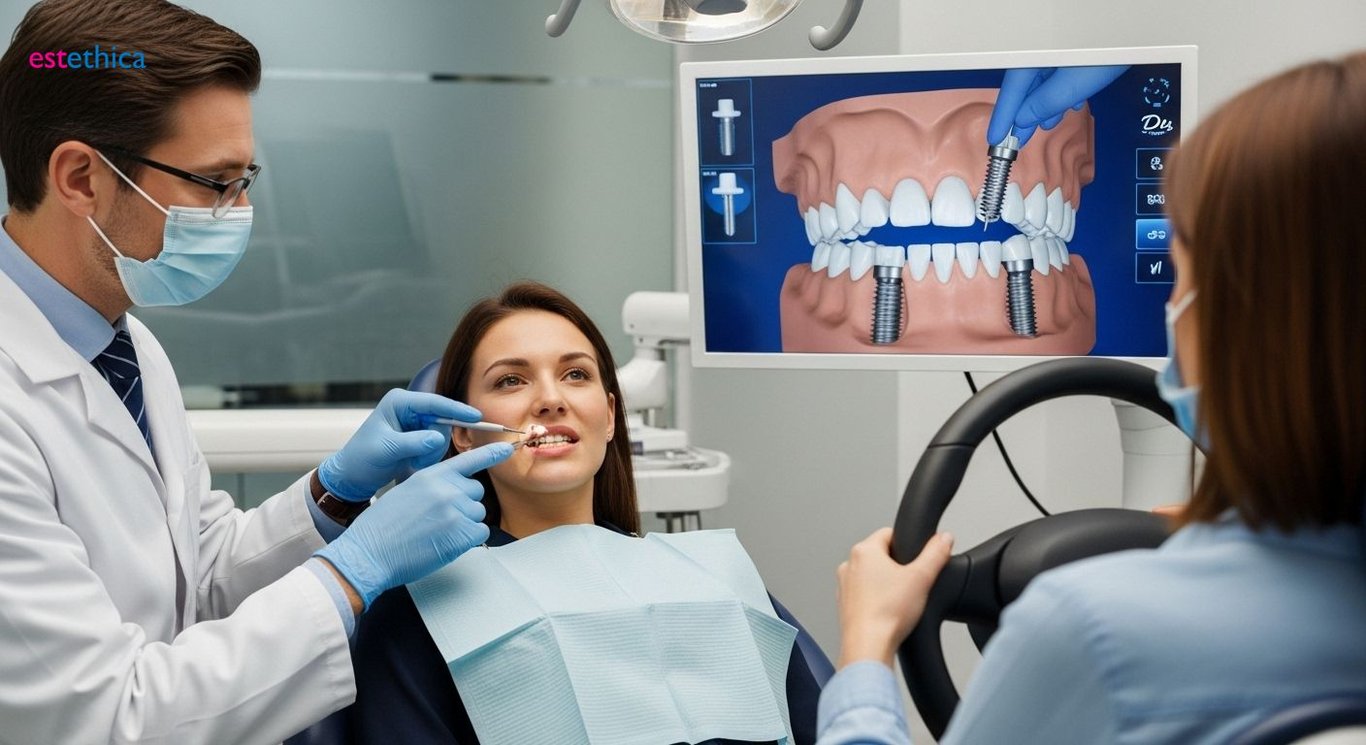
Full mouth dental implants, often referred to as All-on-4, present a groundbreaking solution for individuals missing most or all of their teeth. Unlike traditional methods that use individual implants for each new tooth, All-on-4 utilizes strategically placed implants to support entire rows of artificial teeth. This approach offers significant benefits, making it a preferred choice for many seeking comprehensive dental restoration. With the All-on-4 technique, patients can achieve a fully functional and aesthetically pleasing set of teeth, enhancing their overall quality of life.
This procedure can be truly transformative. Patients regain a fully functional set of teeth, which improves their ability to chew and speak clearly, thereby boosting their confidence and overall quality of life. The All-on-4 method is not only faster and more economical but also reduces the need for extensive bone grafting, making it suitable for a broader range of individuals. The efficiency of All-on-4 dental implants means that patients can often receive their new teeth in just one or two visits, minimizing disruption to their daily lives. This streamlined process, combined with the long-term stability and natural feel of the implants, makes All-on-4 a highly desirable option for full mouth restoration.
Benefits of Full Mouth Dental Implants
- Enhanced Stability: Full mouth dental implants provide a stable and secure foundation for artificial teeth, preventing slipping or movement.
- Improved Chewing Function: With a fully functional set of teeth, patients can enjoy a wider variety of foods, improving their nutrition and overall health.
- Increased Confidence: Restoring a complete smile boosts self-esteem and allows patients to smile, speak, and laugh with confidence.
The All-on-4 Procedure: A Step-by-Step Overview
- Initial Assessment: A thorough examination, including X-rays and scans, to determine candidacy and plan the implant placement.
- Implant Placement: The surgical placement of four titanium implants in the upper or lower jaw to support the new teeth.
- Prosthetic Attachment: Attachment of a custom-made denture or bridge to the implants, providing a fully functional and natural-looking smile.

Dental Implants vs. Dental Bridges: Which is Right for You?
Evaluating the Longevity of Dental Implants versus Bridges
Choosing between dental implants and bridges involves considering several factors, including long-term oral health and durability. Dental implants are known for their potential to last a lifetime with proper care, integrating directly with the jawbone through osseointegration. This process not only provides a stable base for the replacement tooth but also helps prevent bone loss, which is a common concern with missing teeth. Unlike dental implants, dental bridges typically last between 5 to 15 years, requiring replacement over time.
Dental bridges involve anchoring a false tooth (pontic) to adjacent natural teeth, which may require reshaping these teeth to support the bridge. While this can be a quicker and less invasive solution initially, it places additional stress on the supporting teeth and does not prevent bone loss in the area of the missing tooth. In contrast, dental implants stimulate bone growth, maintaining the natural structure of the jaw and preventing the sunken facial appearance that can occur with tooth loss. For example, a patient who chooses dental implants can expect a solution that not only restores their smile but also supports their long-term oral health. Consider a senior patient who opts for dental implants to avoid the discomfort and maintenance associated with dentures; or an individual who selects implants to preserve the alignment of their remaining teeth and prevent shifting. These scenarios illustrate the lasting benefits and stability that dental implants provide.
Key Factors in Deciding Between Implants and Bridges
- Bone Health: Dental implants promote bone stimulation and prevent bone loss, whereas bridges do not address bone health.
- Durability: Implants are designed for long-term use, potentially lasting a lifetime, while bridges typically require replacement every 5 to 15 years.
- Impact on Adjacent Teeth: Implants do not affect adjacent teeth, while bridges require altering the structure of neighboring teeth for support.
The Decision Process: Implants or Bridges?
- Comprehensive Evaluation: Consult with a dental professional to assess your oral health, bone density, and overall suitability for each option.
- Consider Long-Term Goals: Evaluate your priorities regarding longevity, maintenance, and the impact on your adjacent teeth.
- Weigh the Pros and Cons: Understand the benefits and limitations of both dental implants and bridges in relation to your specific needs and preferences.
Osseointegration Expertise: Ensuring Long-Term Dental Implant Success
estethica leverages osseointegration, a biological process where bone tightly fuses with the titanium implant surface, ensuring stability crucial for normal oral functions. This process helps maintain jawbone integrity and prevents bone loss, maintaining facial structure and appearance for the long-term success of dental implants.
estethica's implant dentistry expertise includes the use of advanced imaging techniques like cone-beam computed tomography (CBCT) for precise implant placement, minimizing risks and enhancing long-term outcomes. The proficiency in procedures like All-on-4 full mouth dental implants highlights estethica's comprehensive approach to dental restoration, ensuring patients regain fully functional and aesthetically pleasing teeth.
Patient-Centric Dental Implant Process: From Consultation to Restoration
estethica ensures a patient-centric approach to dental implants, beginning with comprehensive evaluations using X-rays and scans to determine suitability and plan procedures. The process includes precise surgical placement of titanium posts and a healing period for osseointegration, followed by the attachment of custom-made crowns, bridges, or dentures to complete smiles.
Patients at estethica benefit from enhanced aesthetics with natural-looking dental implants that blend seamlessly with existing teeth. The improved functionality provides stability and support, allowing patients to eat, speak, and laugh confidently, while the long-term oral health benefits include preventing bone loss and maintaining jawbone density.
Frequently Asked Questions
What are Dental Implants and how do they work?
What is Osseointegration and why is it important for Dental Implants?
How do Dental Implants compare to Dental Bridges for replacing missing teeth?
What is involved in the Dental Implant procedure?
Are Dental Implants a permanent solution for missing teeth?
Ready to discover your healthiest, most beautiful self with estethica's expert guidance?
📞 Book Your Free Consultation!