


Comprehensive guide to hair transplants: techniques, candidacy, recovery, and achieving natural results. Find out if a hair transplant is the right solution for your hair loss.
Hair loss can be a distressing experience, impacting self-esteem and confidence. Fortunately, advancements in medical technology offer effective solutions, with hair transplantation standing out as a reliable and long-lasting option. This comprehensive guide delves into the intricacies of hair transplants, exploring various techniques, candidacy, recovery, and what to expect from the procedure. Whether you're just beginning to consider hair restoration or are looking for detailed information to make an informed decision, this guide provides valuable insights into achieving natural-looking results and reclaiming your hair's potential. At estethica, we are committed to providing cutting-edge hair transplant solutions, ensuring our patients receive the highest quality care and achieve their desired aesthetic outcomes. Our expert team utilizes state-of-the-art techniques to deliver natural-looking and permanent results.Understanding Hair Loss: Is a Hair Transplant Right for You?
Determining the Cause of Hair Loss
Deciding if a hair transplant is the appropriate solution starts with identifying the reasons behind hair loss. Factors such as genetic predispositions, hormonal fluctuations, certain medical conditions, and the natural aging process can all contribute to thinning hair and baldness. It is essential to consult with a qualified healthcare provider for a comprehensive evaluation to accurately diagnose the cause and determine the severity of your hair loss.
Ideal candidates for a hair transplant generally exhibit stable patterns of hair loss and possess an adequate supply of donor hair. At estethica, our experienced specialists conduct in-depth consultations to assess your specific condition and develop the most suitable treatment strategy. We take into account various factors, including your age, overall health, and personal expectations, to ensure the most favorable outcome.
While non-surgical hair restoration options are available, a hair transplant provides a lasting solution by relocating healthy hair follicles to areas affected by thinning or absent hair. Understanding both the potential benefits and limitations is crucial for making an informed decision about whether a hair transplant is the right choice for you. For individuals experiencing a receding hairline, a hair transplant can be particularly effective in restoring a more youthful appearance. We prioritize patient education, ensuring that you have all the necessary information to make a confident decision regarding your hair restoration journey.
Ideal Candidates for Hair Transplant
- Stable Hair Loss Pattern: Individuals with a consistent and predictable pattern of hair loss, such as male or female pattern baldness, are generally good candidates.
- Sufficient Donor Hair: A successful hair transplant requires an adequate supply of healthy hair follicles from donor areas, typically located at the back and sides of the head.
- Realistic Expectations: Understanding the potential outcomes and limitations of a hair transplant is crucial for patient satisfaction.
Factors Evaluated During Consultation
- Medical History: Evaluating any underlying medical conditions or medications that could affect the success of the hair transplant.
- Scalp Condition: Assessing the overall health and condition of the scalp to ensure it can support the transplanted follicles.
- Hair Characteristics: Analyzing hair density, texture, and color to determine the best approach for achieving a natural-looking result.

FUE vs. FUT: Exploring Modern Hair Transplant Techniques
Understanding Follicular Unit Extraction (FUE)
Follicular Unit Extraction (FUE) is a modern hair transplant technique that involves extracting individual hair follicles from the donor area, typically the back or sides of the scalp, and transplanting them to areas experiencing hair loss. This method is favored for its minimally invasive nature, which results in smaller, less noticeable scars compared to traditional strip excision methods. At estethica, we utilize advanced FUE techniques to ensure precision and optimal graft survival, providing our patients with natural-looking and long-lasting results. The popularity of FUE has grown due to its shorter hair transplant recovery time and reduced discomfort.
The FUE procedure begins with the preparation of the donor area, followed by the extraction of individual follicular units using a specialized micro-punch tool. These units are then carefully implanted into the recipient area, mimicking the natural angle and distribution of hair. The precision of FUE allows for targeted hair restoration, making it an excellent option for addressing a receding hairline or thinning areas. FUE is often chosen by those seeking the best hair transplant surgeon near me, as it requires a high level of skill and expertise to achieve optimal outcomes. At estethica, our team is committed to staying at the forefront of hair transplant technology advancements to deliver exceptional results.
Key Considerations for FUE and FUT
- Scarring: FUE leaves tiny, circular scars that are less noticeable, while FUT results in a linear scar.
- Recovery Time: FUE generally has a shorter hair transplant recovery period compared to FUT.
- Graft Quantity: FUT can sometimes provide a larger number of grafts in a single session, which may be suitable for extensive hair loss treatment.
The FUT Procedure: A Step-by-Step Overview
- Donor Strip Removal: A strip of scalp containing hair follicles is surgically removed from the donor area.
- Follicular Unit Dissection: The strip is then dissected into individual follicular units under a microscope.
- Transplantation: The prepared grafts are transplanted into the recipient area, ensuring proper placement and density for a natural appearance.
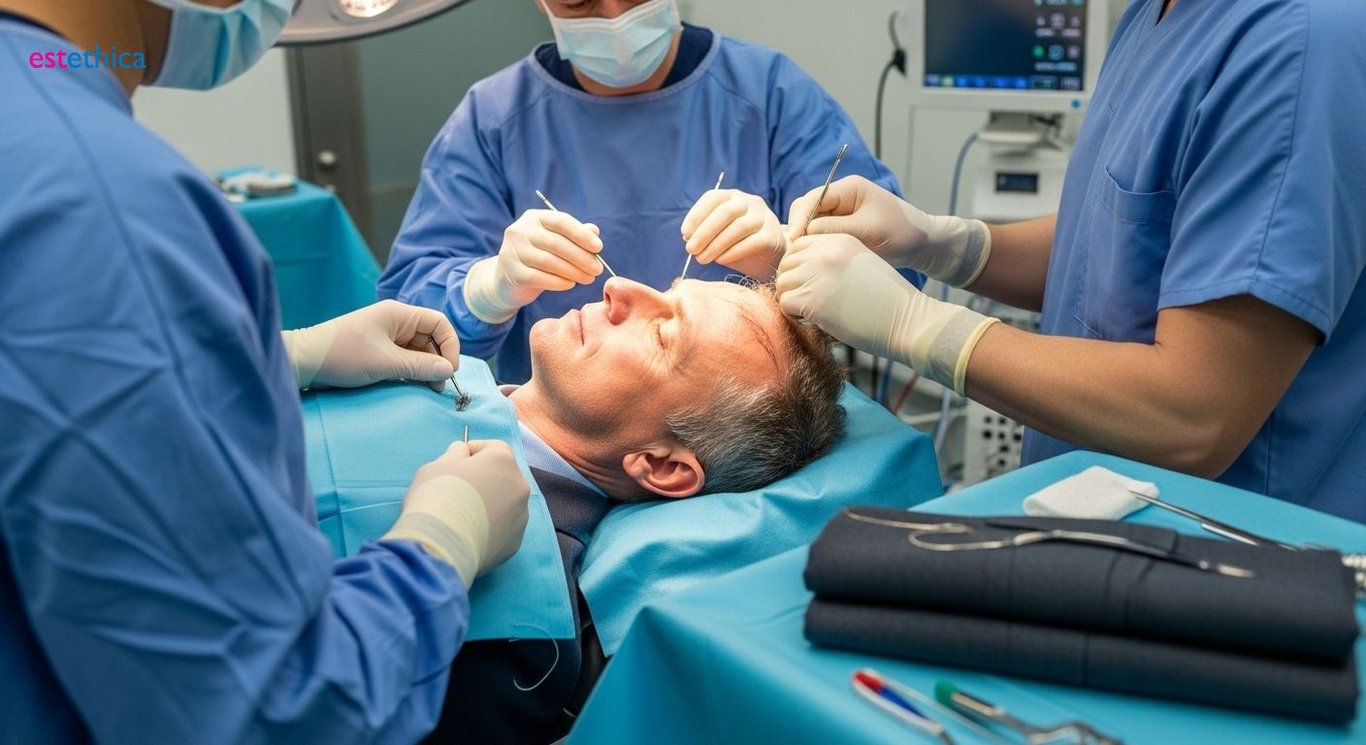
Achieving Natural-Looking Results: What to Expect from a Hair Transplant
The Art and Science of Natural Hair Placement
One of the primary concerns for individuals considering a hair transplant is achieving natural-looking results. The key to a successful hair transplant lies in the skill and experience of the surgeon, as well as the techniques used. A natural-looking hairline, proper graft placement, and appropriate density are essential for a seamless blend with existing hair. At estethica, we prioritize artistry and precision in every hair transplant procedure.
Our surgeons meticulously plan the placement of each graft, considering factors such as hair direction, angle, and density to mimic natural hair growth patterns. We also utilize advanced imaging technology to create a customized treatment plan that addresses your specific needs and goals. The result is a natural-looking hairline and a fuller head of hair that enhances your overall appearance. Factors such as hair texture, color, and the patient's age are also taken into account to ensure a harmonious and age-appropriate result. Understanding that does hair transplant look natural is a common question, we provide detailed consultations and realistic expectations to ensure patient satisfaction. Our commitment to excellence and patient care ensures that you can achieve the natural-looking results you desire.
Key Elements for a Natural-Looking Hair Transplant
- Hairline Design: Creating a soft, irregular hairline that mimics natural growth patterns is crucial for a natural appearance.
- Graft Placement: Ensuring the correct angle, direction, and density of transplanted follicles to match the surrounding hair.
- Individual Hair Characteristics: Considering hair texture, color, and density to achieve a seamless blend with existing hair.
Achieving Natural Results: The estethica Approach
- Comprehensive Consultation: Conducting a thorough assessment to understand the patient's goals and expectations.
- Customized Treatment Plan: Developing a tailored plan that addresses specific needs, considering factors such as hair loss pattern and facial structure.
- Advanced Techniques: Utilizing state-of-the-art methods like FUE to ensure precise graft placement and minimal scarring.

Beyond the Procedure: Optimizing Your Hair Transplant Recovery
Essential Steps for a Smooth Hair Transplant Recovery
The period following a hair transplant is critical for ensuring the success of the procedure and achieving optimal results. Proper aftercare is essential for graft survival and minimizing potential complications. Following your surgeon's specific post-operative instructions is paramount, and this may include avoiding strenuous activities, protecting the scalp from sun exposure, and adhering to prescribed medication schedules. At estethica, we understand the importance of this phase and provide comprehensive support to guide you through every step of the hair transplant recovery process.
The duration and nature of the hair transplant recovery time and process can differ based on the technique used, such as FUE hair transplant or FUT, as well as individual healing rates. Our dedicated team at estethica offers personalized guidance, from the initial days post-procedure to the long-term maintenance of your transplanted hair. We provide detailed instructions on how to care for your scalp and hair, promoting healthy growth and longevity. Our goal is to equip you with the knowledge and resources needed to achieve the best possible outcome from your hair transplant. Proper hygiene, a balanced diet, and avoiding smoking are crucial factors that can contribute to a faster and more effective recovery. We focus on hair restoration by providing continuous support and detailed aftercare instructions, ensuring a smooth and successful recovery.
Key Elements of Post-Operative Care
- Gentle Hair Washing: Proper technique to cleanse the scalp without dislodging grafts.
- Medication Adherence: Taking prescribed medications to prevent infection and reduce inflammation.
- Sun Protection: Shielding the scalp from direct sunlight to prevent damage to the transplanted follicles.
Post-Transplant Recovery Timeline
- Initial Days: Focus on rest and gentle care to promote graft stabilization.
- First Few Weeks: Gradual resumption of normal activities, avoiding strenuous exercise.
- Long-Term Maintenance: Ongoing care and check-ups to ensure the health and longevity of transplanted hair.
Transform Your Look: The Ultimate Guide to Hair Transplant
Advanced FUE and FUT Hair Transplant Techniques for Natural Results
estethica specializes in Follicular Unit Extraction (FUE) and Follicular Unit Transplantation (FUT) hair transplant techniques. FUE involves extracting individual hair follicles for minimally invasive restoration, while FUT offers the possibility of a larger number of grafts in a single session. Both methods are performed with precision to ensure natural-looking and long-lasting results.
Our expert surgeons at estethica meticulously plan the placement of each graft, considering hair direction, angle, and density to mimic natural hair growth patterns. Advanced imaging technology is utilized to create customized treatment plans, ensuring optimal outcomes tailored to each patient's specific needs and goals. The team stays at the forefront of hair transplant technology advancements, delivering exceptional results.
Comprehensive Care and Support for Optimal Hair Transplant Recovery
estethica provides comprehensive support to guide patients through every step of the hair transplant recovery process. Proper aftercare is emphasized to ensure graft survival and minimize potential complications. The clinic offers personalized guidance, from initial post-procedure days to long-term maintenance, providing detailed instructions on scalp and hair care.
estethica is committed to providing cutting-edge hair transplant solutions, ensuring patients receive the highest quality care and achieve their desired aesthetic outcomes. With a focus on patient education and realistic expectations, estethica ensures patient satisfaction. The clinic aims to provide the best possible outcome from hair transplants, supported by continuous support and detailed aftercare instructions, ensuring a smooth and successful recovery.
Frequently Asked Questions
What is a hair transplant and how does it address hair loss?
What are the main differences between FUE and FUT hair transplant techniques?
How long does hair transplant recovery typically take?
How can I find the best hair transplant surgeon near me?
Is a hair transplant a suitable option for a receding hairline?
Achieve your aesthetic goals with estethica's personalized treatments and expert care.
📞 Book Your Free Consultation!