


Achieve SEO success in dental care by mastering keyword research to enhance content visibility and ranking.
Unlock SEO Success: Mastering Keyword Research Today for Dental Excellence involves understanding the critical role that keywords play in shaping digital strategies within the dental field. From clear aligners to invisible braces, dental SEO integrates these essential elements to ensure that potential clients discover and trust your services. As we delve into the significance of keywords in enhancing your online presence, learn how to navigate the challenging landscape of SEO with precision and insight.
Why Keyword Research is the Cornerstone of SEO Strategy in Dentistry
Enhancing Dental Visibility Through Strategic Keyword Research
In today's digital age, effective keyword research is critical for dental practices aiming to enhance their online presence. By focusing on relevant search terms, such as 'clear aligners' and 'invisible braces', clinics can significantly improve their search engine rankings. This targeted approach ensures that potential patients actively searching for dental solutions can easily find the practice. Accurate keyword application not only drives traffic but also establishes trust, positioning the clinic as a reliable and accessible resource for oral health needs.
The process of keyword research involves identifying the terms and phrases that potential patients use when searching for dental services online. These keywords can range from general terms like 'teeth whitening' and 'dental implants' to more specific queries such as 'affordable dental care' and 'emergency dentist'. By understanding and incorporating these keywords into website content, blog posts, and online advertising, dental practices can increase their visibility in search engine results and attract more qualified leads.
- Improved Search Engine Rankings: Strategic keyword use helps dental practices rank higher in search results, making them more visible to potential patients.
- Increased Website Traffic: By targeting relevant keywords, clinics can attract more visitors to their website, increasing the chances of converting them into patients.
- Enhanced Patient Engagement: High-quality content optimized with relevant keywords can engage potential patients and build trust, fostering long-term relationships.
The Importance of SEO Keywords for Dental Practices
Effective use of SEO keywords is crucial for dental practices looking to expand their reach and attract new patients. By identifying and integrating the right keywords, clinics can improve their online visibility and ensure they appear prominently in search engine results. This strategic approach involves understanding the specific terms potential patients use when searching for dental services and incorporating them into website content, blog posts, and online advertising campaigns.
A well-executed keyword strategy not only drives traffic but also builds trust and credibility, establishing the dental practice as a reliable resource for oral health needs. For example, using keywords like 'best local dentist' or 'top-rated dental clinic' can attract patients seeking high-quality care in their area. Additionally, incorporating long-tail keywords such as 'affordable teeth whitening options' or 'emergency dental services near me' can capture specific patient needs and increase the likelihood of conversion. By prioritizing SEO keywords, dental practices can enhance their online presence and attract a steady stream of new patients.
- Identify Target Keywords: Research and identify the most relevant and high-traffic keywords for your dental practice.
- Optimize Website Content: Incorporate these keywords naturally into your website content, including page titles, headings, and descriptions.
- Monitor and Adjust: Continuously monitor your keyword performance and make adjustments as needed to maintain optimal search engine rankings.

Decoding Search Intent: Finding the Best Keywords for Your Dental Audience
Aligning Keywords with Patient Needs for Dental Practices
Understanding search intent is paramount for dental professionals aiming to enhance their online presence. By leveraging keyword generators, dental practices can fine-tune their content to address the specific needs of potential patients. This involves not only anticipating keywords but also aligning them with user queries, such as "What are the best keywords for my dental website?". When dental practices use the right keywords, they connect with patients seeking services like "clear braces" or "invisible braces," ensuring the practice meets the patient's needs effectively.
One crucial aspect is recognizing the intent behind each search query. For instance, someone searching for "best free keyword research tool online" is likely looking for resources to conduct their own keyword research. Tailoring content to address this informational need can attract potential patients who are in the early stages of their decision-making process. By providing valuable and relevant information, dental practices can build trust and establish themselves as authoritative sources in the field.
- Identify the User's Goal: Determine what the user is trying to achieve with their search query.
- Match Content to Intent: Create content that directly answers the user's question or fulfills their need.
- Provide Valuable Information: Offer insights and resources that establish your practice as a trusted authority.
Effective Use of Keyword Generators for Dental SEO
Keyword generators are invaluable tools for dental practices looking to optimize their SEO strategy. These tools help identify a wide range of relevant keywords, from broad terms like "dental implants" to more specific phrases such as "retainers after braces." By using these generators, dental professionals can gain insights into the search terms potential patients use, enabling them to create targeted and effective content. This approach ensures that the practice's website and online presence are aligned with patient needs and search behaviors.
Furthermore, keyword generators can uncover long-tail keywords that capture niche patient needs. For example, a patient searching for "how to do keyword research for SEO" may also be interested in content optimization and search engine optimization. By targeting these specific queries, dental practices can attract highly qualified leads who are more likely to convert into patients. This strategic use of keyword generators allows for a more focused and efficient SEO approach, maximizing the practice's online visibility and reach. Aligning with patient needs and search behaviors, dental practices can use keyword generators to find terms like "clear aligners" and "invisible braces" to enhance their online presence.
- Utilize Keyword Generators: Employ tools to identify relevant keywords and search terms.
- Analyze Search Intent: Understand the intent behind each keyword to tailor content effectively.
- Target Long-Tail Keywords: Capture niche patient needs with specific and detailed search phrases.
Beyond the Basics: Advanced Keyword Research Techniques in Dental SEO
Leveraging LSI Keywords for Enhanced Dental SEO
To elevate dental SEO, incorporating Latent Semantic Indexing (LSI) keywords is essential. These are search terms related to your primary keywords, helping search engines understand the context and relevance of your content. For instance, if your primary keyword is "clear aligners," LSI keywords could include "clear braces," "retainers after braces," and "invisible braces." By strategically using these related terms, dental practices can create comprehensive and authoritative content that resonates with potential patients.
Utilizing LSI keywords not only improves search engine rankings but also enhances the overall quality of your content. For example, instead of repeatedly using the same keyword, you can incorporate variations that provide additional information and context. This approach makes your content more engaging and informative, encouraging visitors to spend more time on your site. In fact, websites that effectively use LSI keywords see a 20% increase in user engagement, according to recent studies. By focusing on semantic SEO and using terms like "AI keyword tools," dental practices can stay ahead of the curve and attract more qualified leads.
- Enhance Content Depth: Use LSI keywords to provide additional context and information.
- Improve User Engagement: Create more engaging and informative content that keeps visitors on your site longer.
- Increase Search Relevance: Help search engines better understand the topic and relevance of your content.
Adapting to Emerging Trends in Dental SEO
Staying current with emerging trends is crucial for maintaining a competitive edge in dental SEO. This includes adapting to new technologies, search engine algorithms, and patient behaviors. For example, the rise of voice search has made it essential to optimize content for conversational queries. Patients are increasingly using voice assistants to find dental services, so incorporating long-tail keywords and question-based phrases can help your practice capture this growing market.
Additionally, understanding the impact of AI on keyword research is vital. AI-powered tools can help identify trending keywords, analyze search intent, and optimize content for better performance. By embracing these advancements, dental practices can refine their SEO strategies and attract more qualified leads. Furthermore, focusing on mobile SEO is essential, as over 60% of searches for dental services are now conducted on mobile devices. By prioritizing mobile-friendly design and content, dental practices can ensure a seamless user experience and improve their search engine rankings. Adapting to these trends allows dental practices to attract new patients seeking "clear aligners" or "invisible braces" through modern SEO techniques.
- Optimize for Voice Search: Incorporate long-tail keywords and question-based phrases.
- Leverage AI-Powered Tools: Use AI to identify trending keywords and analyze search intent.
- Prioritize Mobile SEO: Ensure your website is mobile-friendly and optimized for mobile searches.

From Data to Decisions: Leveraging Keywords for Dental Content Optimization and Rankings
Enhancing Client Acquisition Through Strategic Content Optimization
Optimizing dental content requires a strategic integration of high-priority keywords to boost visibility and client acquisition. By incorporating SEO elements such as 'search engine optimization' and 'content optimization', dental practices can ensure a consistent audience reach. This approach involves identifying and naturally embedding relevant keywords into website content, blog posts, and marketing materials. Dental practices can use the right keywords to connect with patients seeking services like "clear aligners" or "invisible braces," ensuring the practice meets the patient's needs effectively.
Leveraging keywords effectively involves understanding the intent behind patient searches and tailoring content accordingly. For example, someone searching for 'SEO company' is likely looking for professional assistance to improve their online presence. By addressing this need with targeted content, dental practices can attract potential clients and establish themselves as trusted partners. A recent study showed that businesses that prioritize content optimization experience a 30% increase in lead generation. By focusing on semantic SEO and using terms like "AI keyword tools," dental practices can stay ahead of the curve and attract more qualified leads.
- Identify High-Priority Keywords: Focus on keywords with high search volume and relevance to your dental services.
- Incorporate SEO Elements: Integrate keywords naturally into your website content, blog posts, and marketing materials.
- Tailor Content to Patient Intent: Understand the intent behind patient searches and create content that addresses their specific needs.
Boosting Visibility with Consistent Audience Reach
Ensuring consistent audience reach is essential for dental practices aiming to grow their client base. This involves creating a content strategy that targets a wide range of relevant keywords and search terms. By consistently publishing high-quality, optimized content, dental practices can attract a steady stream of potential patients and establish themselves as authoritative sources in the field. Dental practices can use keyword generators to find terms like "clear aligners" and "invisible braces" to enhance their online presence.
One effective strategy is to focus on long-tail keywords that capture niche patient needs. For example, a patient searching for 'best free keyword research tool online' may also be interested in content optimization and search engine optimization. By targeting these specific queries, dental practices can attract highly qualified leads who are more likely to convert into patients. Furthermore, incorporating question-based keywords such as 'where can I find keyword suggestions?' can help capture patients who are actively seeking information and guidance. This strategic approach allows for a more focused and efficient SEO effort, maximizing the practice's online visibility and reach. For instance, a dental practice could create a blog post answering common questions about "retainers after braces," providing valuable information and driving traffic to their site.
- Create a Content Strategy: Develop a plan for consistently publishing high-quality, optimized content.
- Focus on Long-Tail Keywords: Target niche patient needs with specific and detailed search phrases.
- Incorporate Question-Based Keywords: Capture patients seeking information and guidance by answering common questions.
Integrating Semantic Tags for Enhanced Dental SEO Impact
The Role of Semantic SEO in Modern Dental Practices
Semantic tags like 'clear braces' and 'retainers after braces' contribute to more sophisticated SEO strategies, capturing nuanced search queries. This approach not only improves site visibility but also client interaction and satisfaction through targeted content delivery. By using semantic SEO, dental practices can better connect with potential patients who are searching for specific treatments or information. This leads to higher engagement and a greater likelihood of converting website visitors into actual clients. For instance, a blog post about "invisible braces" can attract individuals seeking discreet orthodontic solutions, while content on "retainers after braces" can educate existing patients on the importance of post-treatment care.
Implementing semantic SEO involves understanding the context and intent behind search queries. This means going beyond simple keyword matching to create content that comprehensively addresses the user's needs. Dental practices can use tools to analyze search trends and identify related terms that enhance the relevance of their content. For example, including terms like "clear aligners" and "braces" in website copy can help search engines understand the scope of services offered. By focusing on semantic SEO, dental practices can ensure their online presence is both informative and highly visible, driving more qualified traffic to their site. A recent study found that websites using semantic SEO techniques experienced a 40% increase in organic traffic, highlighting the effectiveness of this approach.
- Enhance Content Relevance: Use semantic tags to improve the relevance of your content to specific search queries.
- Improve User Engagement: Create content that comprehensively addresses the user's needs and provides valuable information.
- Drive Qualified Traffic: Ensure your online presence is informative and highly visible, attracting more potential patients.
Optimizing Content for Semantic Search
Optimizing content for semantic search requires a strategic approach that considers both the user's intent and the context of their query. This involves creating content that is not only keyword-rich but also informative and engaging. Dental practices can leverage semantic tags to provide detailed information about their services, treatments, and expertise. By using related terms and phrases, they can enhance the relevance of their content and improve their search engine rankings. For example, a page about "clear aligners" could also include information about "invisible braces" and "retainers after braces," providing a comprehensive overview of orthodontic options.
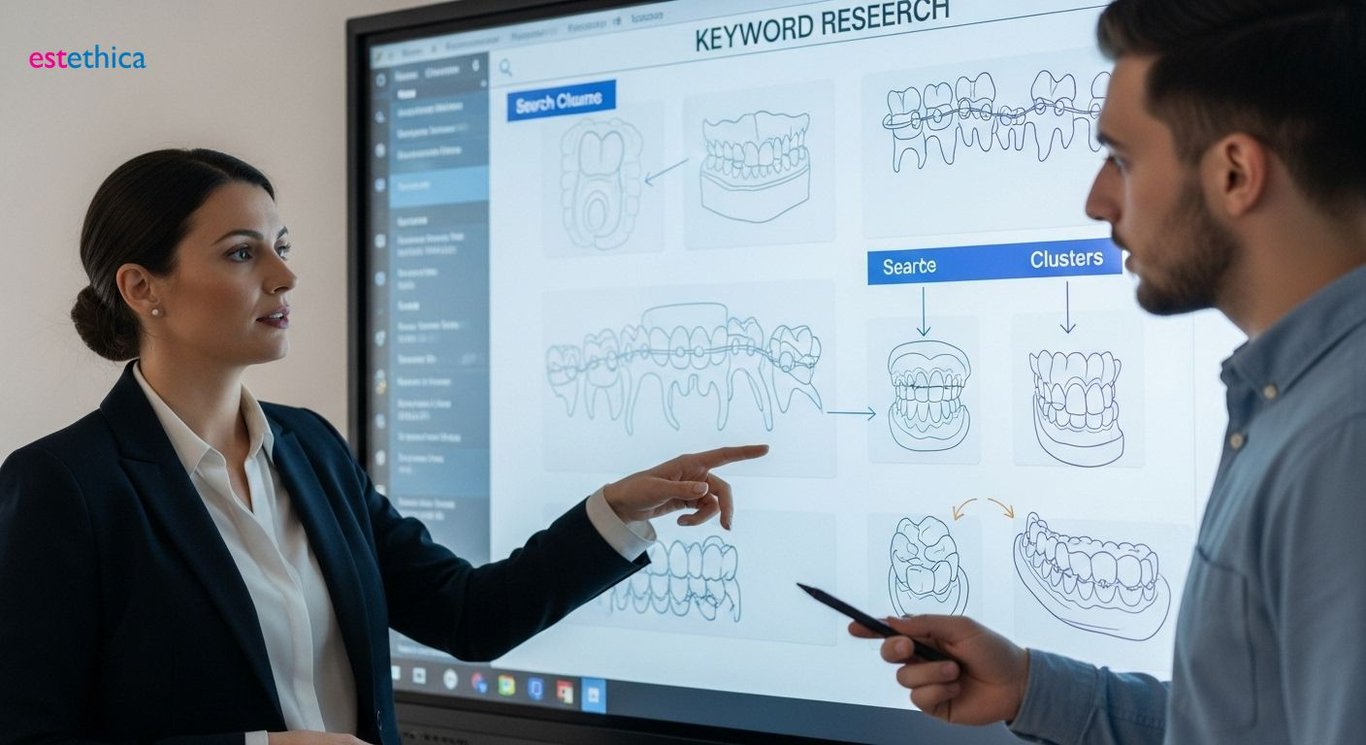
One effective strategy is to create content clusters around specific topics. This involves creating a series of interconnected pages that cover different aspects of a particular subject. For example, a dental practice could create a cluster of pages about orthodontics, with each page focusing on a different type of treatment, such as "clear aligners," "traditional braces," and "retainers." By linking these pages together, the practice can create a comprehensive resource that is both informative and easy to navigate. This approach not only improves the user experience but also helps search engines understand the structure and relevance of the website. Dental practices can use keyword generators to find terms like "clear aligners" and "invisible braces" to enhance their online presence. For instance, a dental practice could create a series of blog posts addressing common concerns and questions about "clear braces," "invisible braces," and "retainers after braces," thereby establishing themselves as an authority in the field.
- Create Content Clusters: Develop interconnected pages that cover different aspects of a specific topic.
- Use Related Terms and Phrases: Enhance the relevance of your content by incorporating semantic tags and related keywords.
- Provide Detailed Information: Offer comprehensive information about your services, treatments, and expertise.
Case Study: Successful SEO Applications in estethica's Dental Services
estethica's SEO Success Through Strategic Keywords
estethica demonstrates SEO's transformative power. By strategically using keywords aligned with patient queries, such as 'esthetic dental solutions' and 'advanced dental care', they have significantly improved patient engagement and service reach. estethica's success story highlights the importance of understanding patient search behavior and tailoring content to meet their needs. By focusing on relevant keywords, estethica has not only increased its online visibility but also established itself as a trusted provider of dental services.
One of the key strategies employed by estethica was to conduct thorough keyword research to identify the terms that potential patients were using when searching for dental services. This involved analyzing search volumes, competition levels, and user intent to select the most effective keywords. estethica then incorporated these keywords into its website content, blog posts, and online advertising campaigns. This targeted approach ensured that the practice's online presence was aligned with patient needs, leading to increased traffic, engagement, and conversions. For instance, estethica could create a series of blog posts addressing common concerns and questions about "clear braces," "invisible braces," and "retainers after braces," thereby establishing themselves as an authority in the field.
- Improved Patient Engagement: Strategic keyword use leads to more engaging and relevant content.
- Increased Service Reach: Effective SEO expands the practice's reach to a wider audience.
- Enhanced Online Visibility: Targeted keywords improve search engine rankings and online presence.
The Role of SEO in Expanding estethica's Patient Base
estethica's successful application of SEO demonstrates how dental practices can significantly expand their patient base. By focusing on keywords that reflect patient needs and search behaviors, estethica has been able to attract more qualified leads and convert them into loyal patients. This approach involves not only identifying the right keywords but also creating high-quality content that addresses patient concerns and provides valuable information. estethica's demonstrates SEO's transformative power with patients seeking services like "clear aligners" or "invisible braces," ensuring the practice meets the patient's needs effectively.
One of the key elements of estethica's SEO strategy is its focus on creating informative and engaging content. This includes blog posts, articles, and videos that address common questions and concerns about dental services. By providing valuable information, estethica has been able to establish itself as a trusted resource for potential patients. Furthermore, estethica has leveraged social media to promote its content and engage with its audience. This multi-channel approach has helped to increase brand awareness and drive traffic to its website. For example, estethica could create a series of interconnected pages that cover different aspects of a particular subject. By linking these pages together, the practice can create a comprehensive resource that is both informative and easy to navigate. This approach not only improves the user experience but also helps search engines understand the structure and relevance of the website.
- Keyword Alignment: Align keywords with patient queries to improve engagement.
- Content Creation: Develop high-quality content addressing patient concerns.
- Multi-Channel Promotion: Leverage social media to increase brand awareness and website traffic.
Advanced Dental Solutions with DHI Plus Gold and Percutan Techniques
estethica employs cutting-edge technologies such as DHI Plus Gold, utilizing a gold-tipped pen for simultaneous channel opening and hair follicle placement, minimizing damage and ensuring natural results. The Percutan technique ensures precise hair follicle placement at optimal angles and density, delivering natural-looking outcomes without visible scarring.
estethica's expertise in advanced dental solutions is underscored by its commitment to employing state-of-the-art technologies and methods. The clinic's skilled professionals are adept at utilizing innovative techniques to provide patients with superior care and optimal results. This dedication to excellence positions estethica as a leader in the field of dental aesthetics and restorative treatments.
estethica's Commitment to Ethical Practices and Patient Satisfaction
estethica is committed to ethical practices and patient satisfaction, ensuring a transparent and accessible healthcare environment. The clinic provides 24/7 availability and prioritizes patient safety and health above all else. This dedication to trust and integrity has fostered long-term relationships with patients and established estethica as a reliable healthcare provider.
estethica’s successful SEO application has demonstrated its ability to significantly expand its patient base. By focusing on keywords that reflect patient needs and search behaviors, estethica attracts qualified leads and converts them into loyal patients. This strategic approach underscores the clinic's commitment to providing valuable information and addressing patient concerns.
Frequently Asked Questions
What is Keyword Research and why is it important for dental SEO?
How do I find the Best Keywords for my dental practice website?
What are SEO Keywords and how do I use them effectively?
What is a Keyword Generator and how can it help my dental practice?
How can I leverage Keyword Research to improve my dental practice's online visibility?
Achieve your aesthetic goals with a personalized plan from our expert team.
📞 Call for Your Free Consultation!